Monday, 30 July 2012

Stem Cells and The Future of Veterinary Medicine

A particular interest of mine within both science and the veterinary world is the potential uses of stem cells in regenerative medicine. So far I have explored this interest through two projects, one focusing upon past methods that stem cells have been heavily involved in and the other looking forward to the future, contemplating how scientific technology and understanding may have improved further in order to allow us to  extend the uses of stem cells.


My first project was centered around an article I read whilst browsing an equestrian website. It documented how a racehorse had been successfully treated after damage was done to the Superficial Digital Flexor Tendon in one of its legs using a course of mesenchymal stem cells originating from bone marrow injected into the site of damage. These mesenchymal stem cells are multipotent, therefore can be  differentiated into a limited variety of specialised cells including tissue cells. The full process is explained in the diagram above. Intrigued by this concept I started to do some deeper research, particularly finding the company website of VetCell of great use and other scientific journals such as "Implantation of bone marrow-derived mesenchymal stem cells demonstrates improved outcome in horses with overstrain injury of the superficial digital flexor tendon. by Godwin E.”  which could then be compared to other studies into conservative methods where the horse is just left in to heal naturally with a controlled exercise programme. Looking at alternative forms of treatment in comparison to stem cells gave me a valuable insight into the number of different treatment plans vets may be aware of and how it is within their duty to explain carefully all the applicable options to a particular case.

The second project examined the future use of stem cells in being able to provide veterinary practices with the option to offer organ transplants, particularly in the case of chronic renal failure in felines. To complete this project I worked with a partner I met at the Vet-Medlink conference and together we constructed the idea that by understanding cell differentiation, we could re-programme adult cells to revert back to an embryonic totipotent state. From this we could cause different genes to be expressed, thus causing different proteins to be transcribed and transcripted allowing us to create specialised cells at will and hopefully a full organ. By using this potential method, the risk of rejection would be non existent as the adult stem cells initially used could be extracted from the patient. We also discussed the idea that with this method more non-clinical veterinarians would be required to oversee the re-programming of adult stem cells and induced differentiation of the embryonic cells created.

From completing these two pieces upon stem cells, I believe that I personally would like to spend some time myself in the future studying these fascinating biological cells and their applications in veterinary medicine. Potentially I would also like to carry out my own research after being inspired by the work and journals I have so far seen. Not only do I believe stem cells will play an ever increasing role in the future of veterinary science, but I additionally predict that the treatments developed through veterinary medicine may be transferred increasingly into human medicine, thus helping to save and improve lives both human and animal.

Image and more information on stem cell treatments:
http://www.vetcell.com/ 


Thursday, 19 July 2012

Current Issue #4- The Falling Price of Milk


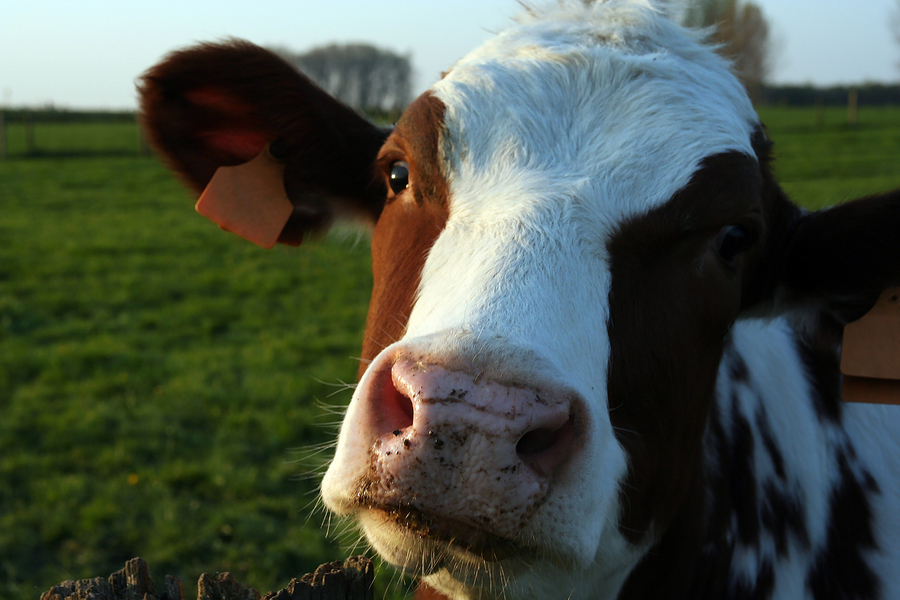
Throughout the UK many farmers run dairies which supply our supermarkets with a source of milk, however recently it has become ever more popular for supermarket chains to turn to importing milk from abroad for a cheaper price, threatening the local smaller farms which already struggle under immense pressure from the supermarkets. The average price of pint of milk is 49p, currently of this 49p the farmer receives 16p. On top of this if you consider the price of feeding the cows, providing them with bedding, paying milking staff, occasional vet call outs and TB testing the farmers actually begin to make losses on producing their milk.

The government has stepped in saying that they have secured a £5million grant to help support the rural sector and aid farmers in getting a fair price for the milk their livestock produce. There are still concerns however that if the situation of the milk market does not improve that many farmers will turn away from dairy farming to perhaps arable farming or otherwise go out of business. In turn this could affect the veterinary community in that the client base of a large animal vet could fall dramatically if a large number of dairy farmers decide to sell their animals for meat and finish their days milking.

A current oversupply of milk on the EU market is also causing the EU to refuse to help increase the price paid to farmers throughout Europe for their milk. Whilst in the UK the NFU are threatening to propose a boycott brands in which the milk processors are cutting the prices of the milk they're provided with to make products such as butter or cream, stating that if the public were willing to pay an extra 4p a litre for milk an other dairy products, farmers would be a lot better off and able to continue their businesses. The supermarket chain ASDA is offering its farmers though an increase for the price of their milk to cover the costs of cuts by other milk proccessors which could be as much as 2p a litre, whilst celebrity chefs such as Jamie Oliver are backing the campaign supporting dairy farmers.

In my opinion and as a consumer of dairy products myself, I feel that paying a little bit extra for milk is fair and justifiable. Having worked on a dairy farm myself through work experience I have seen the struggles farmers often face when trying to extract the milk, from cows with mastitis to just the sheer amount of labour that goes into producing the finished product. Overall I feel that upon this matter we should support our farmers more upon this issue in order that we can keep ourselves a self sufficient island without the need for imports from abroad and additionally to ensure that our countryside can still be a place to find dairy farms.

Sources:
http://www.independent.co.uk/life-style/food-and-drink/news/chefs-jamie-oliver-and-hugh-fearnleywhittingstall-urge-cutprice-milk-boycott-7959429.html
http://www.rugbyadvertiser.co.uk/news/local/dairy-farmers-pay-the-price-for-our-cheap-pints-of-milk-would-you-spend-4p-more-per-litre-to-help-farms-stay-in-business-1-4075460
http://www.bbc.co.uk/news/uk-18792132
Image:http://bestparentever.com/2008/08/23/53-hating-cows/

Sunday, 15 July 2012

Current Issue #3- Avian Influenza


Also known as Bird Flu, Avian Influenza was all over our front newspapers at one point and is still an issue that continues to be carefully monitored by organisations such as DEFRA. It is a contagious disease that is spread virally and can affect the nervous and respiratory systems of many species of bird. People may become affected by certain strains of the influenza virus, however this is a very rare occurrence. This disease is not air-borne therefore can only be contracted by the contact of an infected animal and a non infected animal.

There are known to be two different types of the avian influenza virus, these are categorised as Low Pathogenic Influenza (LPAI) and High Pathogenic Influenza (HPAI). LPAI strains of the influenza do not always cause any visible symptoms in the bird whereas strains of HPAI can spread quickly through a population often leading to a high mortality rate. The symptoms a bird shows if infected with a strain of HPAI  include oedema,  loss of appetite, respiratory problems and a fall in egg production and the birds sometimes die on the first day of showing these symptoms.

To prevent the disease spreading through a flock good biosecurity measures should be taken such as insuring wild birds do not come into contact with the flock, regularly checking birds for signs of the disease, and ensuring birds are kept in clean housing. If any signs of the disease are observed the owner of the flock must report to the AHVLA immediately. 

The potential pandemic strain that the newspapers reported back in 2009 was the strain H5N1, with 306 people reported by WHO to have died from contracting the disease. There is still a fear however that if the strain were to mutate further it could become transmittable between humans, thus scientists are currently working upon understanding the disease further and its potential to mutate. Several domestic animals such as cats, dogs, ferrets and pigs have also been documented as having contracted a variation of the H5N1 strain, making it a concern for both veterinarians and doctors.


http://en.wikipedia.org/wiki/Avian_influenza
http://www.hpa.org.uk/Topics/InfectiousDiseases/InfectionsAZ/AvianInfluenza/
http://www.defra.gov.uk/animal-diseases/a-z/bird-flu/
Image:  http://www.gatewaygreening.org/blog/?tag=urban-chicken


Thursday, 5 July 2012

Work experience...equestrian style

Hello again!

With a long summer looming before me and the prospect of undetaking several placements in a range of different animal establishments in the final bid before applying to UCAS, I thought I'd use this post to talk about the previous work experience I've had with horses at a local stables that I've been riding at since I was 10, have loaned a few different horses from in summer holidays and of course spent countless weekends helping around the yard with every aspect of horse care from the less glamourous tasks such as mucking out, to grooming the riding school horses, helping with their worming programmes, bandaging, feeding and turning out!

In relation to veterinary, whilst down at the stables I dealt with a pony who suffered from sweet itch, a condition that about 5% of the equine population suffer from. Symptoms of the disease included bald patches which on this pony were present on the dock of the tail and the crest of the mane as a result of constantly rubbing against the paddock fencing which became more vigorous during the summer months. Sweet itch is a hypersensitive allergic reaction to a midge bite and although currently there is no cure there are ways of managing the condition. The stables I helped out at treated this pony in several ways- firstly, the pony was regularly sprayed with insect repellent, wore a specially designed  turnout rug to prevent the midges being able to bite the pony further and also stabled the pony during dusk.

Another pony at the stables was prone to chronic laminitis, meaning that the laminitis was a continuous problem throughout the pony's life. The main cause of laminitis is poor digestion and over eating rich grass (rich in fructan sugars)  especially in spring and summer. If these fructans are not broken down properly acids are produced in the body that can damage blood vessels. If the blood vessels in the laminae of the hooves are damaged in this way inflamation occurs. Damage to the laminae means that the pedal bone cannot be held in place properly and it begins to move position causing pain. Treatment usually includes anti-inflammatorities and a diet change. The condition can be managed in a few ways... One approach is corrective shoeing with the most popular type of shoe being the heart-shaped bar. Another is to restrict the pony's intake of the high fructan source food, on my placement the pony in question was kept in a restricted grazing area where only a limited amount of grass coule be eaten and was only allowed out to graze for a few hours (usually about 2-3) a day.

During the winter months, another common problem I often saw the riding school horses have was mud fever. Around the fetlock area, sores appeared often caused by a mixture of bacteria obtained from muddy fields. This condition can often lead to lameness. The stables I was at dealt with mud fever by regularly washing the horses hooves during the winter months with an antiseptic solution and then drying them thoroughly. Long fetlocks were also cut shorter to prevent them picking up as much mud, especially on the cob breeds that were present.

                                                                               The first picture is of myself riding a horse called Buddie about two years ago. Due to the pinking on his nose, I learnt the need for sun cream to be applied on hot days to prevent burning as grey horses are particularly prone! He also taught me a lot about horse management, as I was responsible for keeping him groomed, washed, fed, watered during the hot summer months. Bonny was another horse who taught me a lot in terms of animal handling, especially as when I first started working with her she was young at only four and quite nervous if separated from her herd. From her I learnt how to handle partially nervous horses both on the ground and whilst being ridden, as at first she did not like to be caught from the field nor did she enjoy hacking out alone, often spooking and napping. However with a bit of work, Bonny was happily walking around the village on her own whilst on hacks and would allow me to bring her in from the field without throwing a tantrum, just proving that patience really does work!




Monday, 2 July 2012

Current Issue #2- Bovine Tuberculosis

One of the most recent issues affecting livestock farmers is Bovine Tuberulosis (bTB), caused by an infection of the Mycobacterium tuberculosis bacteria strain. The disease slowly develops with age as the bacteria responsible for causing bTB only replicates every 12-20 hours. The first noticable sign of infection is in the lymph nodes of the cow with lesions eventually developing on the surface of lungs. This can then progress into a fever, weakness and a lack of appetite with severe cases leading to emaciation.  It is believed to be spread by exchanging respiratory fluids and secretions from infected to uninfected livestock through contact.

Measures have been taken to reduce the spread and number of cases of bTB such as compulsary testing for cattle herds usually every four years and a special slaughter initiative means that clinical signs of bTB are on the decrease. If herds are not tested before a certain date restriction movements are placed on the herd to prevent a potential spread of the disease.

Good husbandry practices on farms also helps to prevent bTB from affecting livestock, these can be just simple measures such as providing good ventilation, ensuring animals are not kept in confined spaces, creating a health plan with the local vet for a herd, keeping wildlife who may carry the disease out of barns and practice good biosecurity to prevent contamination.

However, if bTB is detected in a herd, the case will be referred to the AHVLA, movement restrictions will initially be applied whilst investigations continue. If cattle that are known as "reactors" i.e they have failed two TB tests or given inconclusive results twice, they are considered a potential danger and are isolated, their mik prevented from being used for human consumption and a humane method of slaughter is arranged. Compensation may be awarded to the farmer for any animals that need to be removed for these reasons. In 2004 approximately 22,000 cattle were sent for slaughter due to being infected with bTB.

bTB is additionally a zoonotic disease meaning that it can be transmitted to humans from livestock.
Recently, the government has also been involved in proposals to cull badgers, believed to be carriers of the disease afflicting cattle. However following advice from veterinarians, in Wales the plans of badger culling have been dropped in favour of vaccinations which if conducted should be more cost effective for the government and overall more effective in reducing the spread of the disease. A study of the vaccine was found to reduce TB in badger by at least 74% however whether this will reduce bTB in the long term has not been investigated.


Sources:
http://www.bva.co.uk/atoz/Bovine_Tuberculosis%20.aspx
http://animalhealth.defra.gov.uk/managing-disease/notifiable-disease/bovine-tb/index.htm
http://www.guardian.co.uk/environment/2012/mar/26/badger-cull-bovine-tb-cattle-vaccination
Image: http://news.lancs.ac.uk/Web/News/Pages/Research-shows-parasite-is-hampering-moves-to-cut-cattle-TB-in-UK.aspx