Wednesday, 22 August 2012
Equine health and the London 2012 Olympic Games
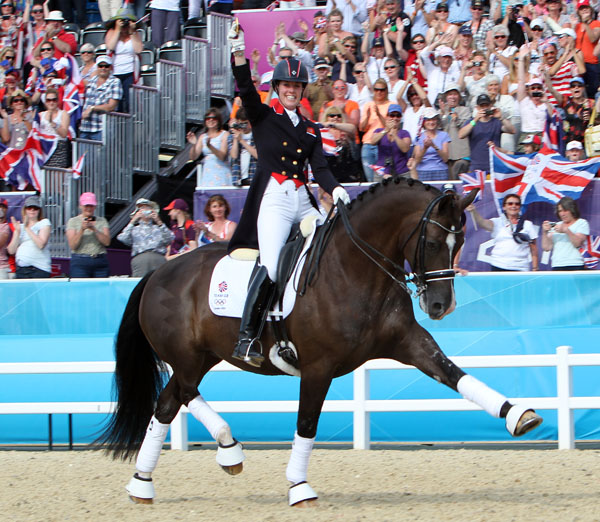
The Olympic Games have closed and at the time of writing this the Paralympic Games are about to begin. Throughout the Olympic Games we have seen fantastic horsemanship from all countries and I am particularly proud of Team GB. Who can forget those wonderful Team Golds for Team GB in the Showjumping and Dressage, and another Gold with Charlotte Dujardin in the Freestyle Dressage, or even the Team Silver in the Eventing?
These spectacular events feature equine athletes who can be worth thousands if not hundreds of thousands of pounds. It also involves equines being transported from all parts of the globe ready to compete and with that comes the risk of spreading diseases, therefore the AHVLA have had a huge role to play this summer in ensuring London's Olympics have been running not only smoothly but safely for both human and animal competitors too. According to the AHVLA routine risk assessments were carried out and grooms were taught the procedures that needed to be carried out if a horse was suspected to be carrying or suffering from a disease.
In addition at Greenwich itself where the equestrian action took place, all horses were subject to strict veterinary checks in order to ensure the horses were fit to compete, with vets always on-call to discuss any issues that may have arisen. Also the horses had access to an on-site veterinary clinic apparently kitted out with all the technology that may possibly be needed to provide top quality veterinary care during the Games. The clinic also included a pathology lab where tests could be run and equine physiotherapists that could be used by the teams. A Specialist equine ambulance was also prepared just in case of any accidents that could occur during the competition and was reportedly one of only 3 vehicles in the world.
Upon leaving the country after the Games, many equines will also be tested before being exported to ensure they have not caught a disease whilst here in the UK to prevent possible spread to other countries were such a case to be found. In particular the AHVLA test for: African Horse Sickness, West Nile Virus, Equine Viral Arteritis, Glanders and Vesicular Stomatitis.
No one can deny that the London 2012 Olympics have not been incredible to watch and a have helped to make this a proud year for all of Team GB, however I must say that I am also in awe of the amount of planning and thought the organisers and AHVLA have put in to ensure that this Games was a success for all those involved in the equestrian section! It just goes to show how many people in the veterinary sector work tirelessly to continue to promote and protect equine health and welfare and those who have helped to do so should be in my opinion as proud as the athletes who have won Golds in the equestrian for without them things may not have run so smoothly!
Sources: http://www.horsehealthmagazine.co.uk/?page=news
http://horsetalk.co.nz/2012/07/31/olympic-horses-have-best-health-facilities/#.UDUbx6mPW8A
http://www.defra.gov.uk/ahvla/2012/07/24/protecting-equine-health-and-welfare-during-the-olympic-games/
Image of Charlotte Dujardin and Valegro: http://www.dressage-news.com/?p=17297
Friday, 10 August 2012
Working with wildlife!
Primarily I have spent most of the week so far hand feeding baby hedgehogs that have been brought in by various members of the public and the RSPCA. The main reasons for these hedgehogs being brought to the hospital is due to them being found out in the daytime, often dehydrated and with no mother in sight, whilst hedgehogs are supposedly nocturnal. Every 2 hours, the hedgehogs have to be fed with a solution of milk for puppies (never feed hedgehogs cows milk due to the lactose in it which hedgehogs are not designed to deal with), with a syringe and a note is made of how much each hedgehog drinks.
Another main task of mine has been feeding the baby birds from pigeons to house martins which has helped to develop my knowledge in general about the wild birds in Britain and their different diets. The pigeons were fed with a solution of "goop" which contains a whole load of ingredients from meal worms to mashed corn, whilst the house martins were fed maggots as and when they would open their mouths.
It also wouldn't be work experience without a bit of hardcore cleaning! Cleaning out aviaries allowed me to see how the centre had equipped itself for the needs of many different species from foxes which I'd never seen up close before, to buzzards, kestrels, crows, squirrels, owls and falcons. The foxes in particular were a favourite of mine as they were fascinating to observe from a distance as they played together although they were naturally very shy!
From going on this placement I have a newly found understanding of British wildlife and the issues that currently affect it as well as a greater understanding of zoonotic diseases, the difficulties of hand rearing, and the balance between keeping the animals wild by minimal contact and trying to help them recover. Everyone there was really friendly and made the experience a really pleasurable one, it was also nice to do some work for a very deserving charity at the same time and I hope that sometime in the future I get the opportunity to go back and do further volunteer work.
Image of kestrel:
http://www.animalcorner.co.uk/britishwildlife/kestrel.html
Image of fox cub:http://www.jameswarwick.co.uk/do/ecco/view?listid=2&listcatid=44Monday, 6 August 2012
Vaccinations, vaccinations, vaccinations!
One of the most common things I saw in the vets consult room on work experience was vaccinations being carried out in dogs, cats and rabbits. So I thought I'd post on here for my own personal recollection and for anyone who doesn't really know where to start with vaccinations some basic information on what a vaccine is, why it is needed and what diseases domestic species should be vaccinated against.
In simple terms, a vaccine is used to build up immunity to a particular disease and stimulates the body to create antibodies which the immune system then remembers and can use to fight off the disease if it encounters the body again. Most vaccines contain either a weakened strain of the disease or a dead strain of the disease that is injected just below the skin to stimulate an immune system response and start the production of antibodies. Booster vaccinations are then given routinely to remind the body how to defend itself in case of pathogen attack!
The common canine is vaccinated against the following at 8 weeks old and then again at 10 weeks with boosters needed annually otherwise the puppy course of vaccinations must be started again:
- Distemper
- Parainfluenza
- Hepatitis
- Leptospirosis
- Parvovirus
Felines are vaccinated at 9 weeks with a booster at 12 weeks against the following with annual boosters:
- Feline Calicivirus
- Feline Infectious Enteritis
- Feline Rhinotrachetis (Cat flu)
- Feline Leukaemia virus
- Chlamydophila
Rabbits are only vaccinated against two diseases annually:
- Myxomatosis which can be caught from contact with fleas off of wild rabbits
- Viral Haemorrhagic Disease
Horses can be vaccinated against at the age of 5 months, with annual boosters:
- Tetanus
- Equine Influenza
- Equine Herpes Virus
A herd of cattle should be vaccinated against:
- Brucellosis
- Bovine Viral Diarrhea
- Infectious Bovine Rhinotrachetis
- Leptospirosis
- Pasteurellosis
- Bovine parainfluenza
As you can see there is a wide range of disease out there that could potentially prove fatal to your pet should you fail to get them vaccinated, therefore it's always worth making the trip to the vets and keeping up to date with boosters to make sure your pet stays protected and their future health safe guarded!
Image 1: http://luckydoguk.wordpress.com/
Image 2: http://www.mayfairvet.com/our_services/vaccinations
Sunday, 5 August 2012
Work experience at a mixed vets
This past week I have thoroughly enjoyed being on placement at a mixed vet practice where I got to see for myself the variety of different cases that can walk through the door and how the vets deal with such diversity. Prior to this placement I had already completed a further week a specialised small animal only practice during my summer, therefore it was nice to be able to experience a different approach to not only the running of the practice but the type of patients that the vets had to work with, as well as different types of anesthetics used.
First of all I spent most of my time in the consult rooms with the vets and observed their use of body language and voice whilst dealing with clients. I noticed in particular the way that the vets kept mainly open body and soft voices when addressing the animal patients, whilst using their computer records to ensure that they were up to date with the animals full history, name and why they were being brought in. Whilst listening to the owner, the vet would occasionally nod to show their understanding, smile at appropriate moments for example when a puppy shows some affection to its owner or them and offered reassurance to the owner in terms of health checks, vaccinations and any operational procedures as well as informing them of any potential risks or side effects.
Throughout the week I saw a wide variety of cases: from a cat with a swollen neck abscess that fluid needed to be extracted from, to a hamster with an eye infection, a boa constrictor with a respiratory tract inflammation, rabbits with overgrown teeth, a cat that had unpredictably attacked its owner untriggered,
a chicken who unfortunately had developed flystrike and a cat with a condition known as Feline Resorptive Leisions. In addition there were also the usual puppy and kitten vaccinations, a dog issued with a passport and multiple health checks. The mixed practice also dealt with a case of horses with ear mites, whilst one vet talked about his time performing a cesarean on a cow and the difficulties that ensued.
One vet I shadowed even gave me basic anatomy lessons whilst carrying out operations in the afternoons, pointing out key parts of the reproductive systems and filling me in on some very long terminology (such as the gubernaculum)! I was also allowed to prepare a vaccine under the supervision of the vet. I was additionally talked through by the nursing staff how the anesthetic and machine they used worked...In cats an injection of ketamine is given which keeps them unconscious whilst any operational work is done and only pure oxygen is supplied by the machine. Dogs are pre-medded and then kept unconcious by administering isoflurane and pure oxygen. The ET tubes connecting the animals to the machine should only be removed in dogs before they swallow and in cats after they swallow to avoid damage to the airways.
Overall I really loved working at the mixed practice and really appreciate the attention, depth of information and support the staff there provided me with. I would absolutely love to go back and do further work experience with them when I get a chance! So far I feel this summer has been rather successful in the work experience department with me learning so many new things each week and my motivation to be a vet only strengthening with time! Next week I'm at a wildlife hospital on work experience so I shall let you all know what I learn there, in fact I'm rather excited just to work with some animals I've probably never seen up close before!
Image: http://equinelaw.alisonrowe.com/2009/07/articles/liens/lien-for-texas-large-animal-vets-to-take-effect-september-1-2009/
Wednesday, 1 August 2012
Current Issue #5- PETS (Pet Travel Scheme)

After seeing a dog today on work experience be issued with a rabies vaccine and a pet passport I decided it was time for me to investigate the benefits of a Pet Travel Scheme for myself, especially after the vet went through the numerous rules and regulations regarding pet travel with the owner.
The scheme changed in January 2012 to ensure the UK had similar method to the rest of Euope when allowing animals to move across borders. Quarantine is now no longer as common with pets being able to travel in and out of countries without being withheld so long as they meet a set standard. These standards are in place to prevent the entry and spread of rabies into this country as well as other potential problems such as ticks from other territories capable of passing on harmful diseases.
In preparation for leaving this country, a cat, dog or ferret must firstly be microchipped in order to act as a way of identifying an animal. Next the animal must be up to date with its rabies vaccinations and must have a record of these vaccinations kept in the passport it is issued with and signed by a veterinarian. After the rabies vaccine has been issued a pet may leave the country at any time, however it may not return back to the UK in under 21 days, as this is the time period specified in which to give time for the vaccine to work fully. Before coming back to the UK all animals must be treated for tapeworms and ticks and proof that the relevant treatment has been given must be provided. This proof comes from the vet in another country watching you place the appropriate treatment onto the animal and signing it off in the pet passport to say it has been completed. The treatment must be given 1-5 days before returning to this country, however cannot be given in under 24 hours or over 120 hours before return.
If the animal is returning from a non EU country, there are additional steps to the process. A blood test must have been arranged to prove that the rabies vaccine has built up a satisfactory level of immunity and must be taken at least 30 days before returning. A third country veterinary certificate needs to also be obtained and the animal must also enter the country with a trusted and well respected animal transport company.
Looking over the different steps of the Pet Travel Scheme I do believe it to be beneficial and much better than placing animals in quarantine for a period of time which could cause the animals additional stress and trauma on top of that caused by prior travelling. The scheme ensures that the animals and people of the UK remains protected from rabies which is a zoonotic disease which causes inflammation of the brain, in addition to other diseases and parasites not usually seen in this country which could be otherwise introduced if careful documentation and regulations were not present. Overall I see it as a force for good in protecting both animal and human health in the UK whilst allowing pets to join their owners whilst abroad.
Sources: Vet School by Christopher Shivelton Queen
Subscribe to:
Comments (Atom)


