Thursday, 14 February 2013

Schmallenberg Virus updated!

In 2012 I created a post on the Schmallenberg virus affecting livestock in the UK. A few months on I've returned to reflect on this virus which unfortunately is still causing the loss of lambs and calves, with no vaccine to protect herds in the future available at present.

As mentioned before, Schmallenberg is spread by midges which act as vectors for the disease. It is believed that midges from Europe carried this disease across the Channel where it was then transmitted by our own native midges through biting the livestock, whilst the disease remained dormant in the winter months. In adult livestock, the disease does not pose a large threat with most recovering having only shown symptoms of reduced milk yield and a fever. It is if bitten by a midge carrying the virus whilst pregnant that the disease causes problems for the animal and its young. The implications of being infected by Schmallenberg whilst pregnant are stillborn lambs and calves often with twisted, deformed limbs, curved spines and damage to the nervous system. As a result if called out to such a case, cesareans are sometimes required to remove dead lambs, and in the process ewes are also often lost. In addition with the price of lamb falling, cesareans are becoming a less economical option for farmers.

Now as early lambing begins, farmers have noticed an increase in the number of cases of Schmallenberg lambs with farms reporting cases in all counties of England and Wales. It is expected that herds infected can expect to potentially lose up to 30% of their lambs. Obviously this will have a knock on effect on sheep farmers economically, but also psychologically after having to deal with the mental strain of delivering stillborn, deformed lambs and the potential euthanasia of some of their ewes.

A vaccine isn't out of the question in the future however, as scientists have been working on one, but currently due to the need for such vaccines to pass clinical testing and licensing standards it is believed that a vaccine will not be available until the summer at the earliest which will be too late for many herds around the country this year, but promises hope for subsequent years where farms may be better protected against the virus.  
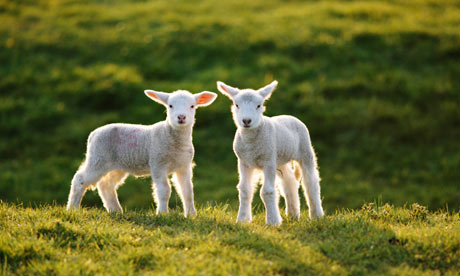
Picture: www.guardian.co.uk/lifeandstyle/wordofmouth/2010/feb/12/lamb-school-teaching-andrea-charman

Sources:www.defra.gov.uk/animal-diseases/a-z/schmallenberg-virus/
www.nottingham.ac.uk/news/pressreleases/2013/january/schmallenberg-virus,-a-grim-picture-for-2013.aspx
www.bbc.co.uk/news/uk-wales-21390225

Thursday, 25 October 2012

Bovine TB updated!


It's continued to attract media attention and has become rather a controversial topic at the moment. Badger culling to prevent the spread of Bovine Tuberculosis was the proposed action plan in Gloucestershire in the hope of potentially reducing the number of bTB cases by up to 16% DEFRA quoted. Bovine Tuberculosis costs the taxpayer £100 million per year and last year caused the slaughter of 26,000 infected cattle placing strain on farmers whose herds are affected.

However in the past week the government has postponed the proposed cull until 2013 as in order for the cull to be effective it was found in a randomised trial known as the Krebs trial, 70% of the badger population in the area would have to be eradicated, however farmers felt that this number could not be achieved before the winter months set in and the badgers returned underground.

To campaigners, this news was of great relief as it gives them more time to gain more support against the cull with an e-petition already gathering over 150,000 signatures. Many feel that a vaccination programme for both cattle and badgers is the way forward, however this is currently banned by the EU as it interrupts the tuberculin skin test which detects Tb cases in cattle. Recently it has been announced that scientists working for the Animal Health and Veterinary Laboratories Agency have found a way of making the vaccine distinguishable from the response of the skin test meaning that vaccination may become a slightly more viable method of dealing with bTB. But like any other testing process, it still has to be trialled in order to prove it does work in the way it should and validated by regulating bodies meaning that it may come too late for this particular case.

So let's look at the arguments for and against badger culling as a method for dealing with bTB.

For
Evidence from the Krebs trial, a £50 million study suggested that if the condition of 70% of a badger population in an area could be met that cases of bTB could be reduced by approximately 16% after nine years.

Vaccination of both badgers and cattle proposed by the other side are costly, time consuming and rely on being able to trap a large proportion of the badger population which may prove difficult in practice. Vaccination is a preventative and will not cure the badgers already carrying TB.

A reduction in bTB cases if achieved through the cull will also see a reduction in the amount of taxpayers money compensating farmers whose herds have to be destroyed because of bTB.

Farmers are willing to pay for the cull themselves without the use of taxpayers money to hold the cull.

Against
There is also evidence to suggest culling could increase bTB cases in the area as badgers surviving the cull would move to form new family groups spreading the disease, this could lead to more cases outside of the cull zone although the impact will decrease over time.

The method planned for culling badgers by free shooting was not used in the initial randomised trial, instead badgers were trapped and then killed, therefore the results produced by the cull could be less or more than expected as the cull may not be carried out with the same vigor.

Badger and cattle vaccination is supported by many animal charities and has shown positive results in badgers where it has been used by conservation authorities in England, Wales and Northern Ireland.

Biosecurity improvements are also another favoured method as bTB is believed to be transferred from badgers to cattle through faeces and urine.  It is estimated that to farmers the cost of improving biosecurity to prevent badgers from coming into contact with cattle is roughly £4000, when considering the cost of a case of TB leading to the destruction of a herd which can cost £27,000 this measure appears more cost-effective.

Many fear that badger culling has become overidden by political opinion and emotion rather than the scientific evidence already presented.


Image of badger :http://www.telegraph.co.uk/earth/earthnews/9615773/Badger-cull-will-cost-taxpayers-millions.html
Image of cattle: http://www.topnews.in/usa/cattle-descended-small-herd-domesticated-around-10500-years-ago-216597

Other sources: http://www.dailymail.co.uk/sciencetech/article-2214442/British-vaccine-breakthrough-save-cows-TB-end-controversial-badger-culls.html?ito=feeds-newsxml
http://www.bbc.co.uk/iplayer/episode/b01nbrj7/Material_World_18_10_2012/
http://www.bbc.co.uk/news/health-19637936

Friday, 5 October 2012

So this is it!

After weeks of preparation, my UCAS application to the vet schools went off today! I have finally chosen to apply to Nottingham, Bristol, The Royal Veterinary College and Edinburgh, there are a few more formalities I'm left to do to complete my application such as work experience questionnaires and the BMAT. Now I'm left feeling quite anxious but then excited at the same time, a weird mix I know!

At the same time I am still continuing with my weekly work experience at the vets and milking at the weekends, this is helping to keep me driven to get the grades in the summer whilst also keeping me informed of issues in the veterinary and farming world which I realise I need to be aware of. Additionally I'm finding regular work experience at the vets has allowed me to put into context some of the things I'm learning in Biology and Chemistry especially as the vet I often watch in consults is great at explaining things to me afterwards such as the drugs he's elected to prescribe, why he's given certain pieces of advice, and how he deals with certain situations. If you're interested in a career in veterinary medicine in my opinion, getting a regular work experience placement if possible with a local practice is a great opportunity, especially as the longer you spend with a practice the more they seem to trust you and the more you learn! I'd also say that working in more than 1 practice has been an interesting experience as each practice has its own routines and approaches.

Anyway, I just thought I'd leave a quick post to summarise where my quest to be a vet is at so far!

Picture: http://umcspace.missouri.edu/historic/buildings/VetScience/1989.htm

Saturday, 15 September 2012

Milking time!

Since I will be going back to a dairy farm tomorrow to fit in some more work experience with cattle, I thought I'd post what I learnt from my experience there last time and have a re-cap myself!

First of all I helped to bring in the cows from the nearby field into a 14/28 milking system which as the name suggests milked 14 cows at a time on either side. Once into the milking parlour, an antiseptic solution was placed on the cow's udders to ensure they were clean and would not contaminate the milk being produced, the farmer taught me how to attach the machinery to the udders. After the machinery had milked the cows, it detached itself and sent out jets of water...which often ended up soaking me and it was my job to dip the teats of the cow in iodine to prevent the possibility of mastitis occurring. In terms of animal handling skills, I was also told how when dealing with cows it is better to stand to behind them than to the side as there is a reduced chance of you being kicked.

After milking, I was shown to two new-born calves who I got to feed with a solution of pre-made milk. Both of them were twins and the farmer discussed with me how this had a negative effect upon the mother and told me that twins were not favoured in cattle raising. As soon as they were old enough the farmer intended on sending them to market.

Next, I followed the farmer out to watch her inject a cow with antibiotics following a recent infection and helped to pen the cows up for the night. Finally I returned to the milking parlour and helped to wash down the surfaces and machinery in order to prevent the spread of disease and attracting flies which could lead to flystrike in the herd and is obviously unhygienic for producing milk in. By working on a dairy farm I witnessed the commercial side of keeping livestock and the hard work farmers have to put in in order to meet demand and survive as well as keeping a healthy, happy herd.

Last time I went milking was really fun as I enjoyed the hands on experience and getting stuck in, so I am looking forward to going back again tomorrow a lot and will keep you updated!
                                 
Image: http://www.collapseboard.com/everett-true/the-sacred-cows-of-indie-music-3-joy-division/attachment/us-dairy-cattle/

Tuesday, 11 September 2012

The basis of animal welfare - the five freedoms.


The five freedoms was initially suggested by Professor Roger Bramwell after the government asked him in 1965 to conduct an investigation into the welfare of intensively farmed animals. From this investigation Bramwell reported that animals should have certain rights if kept under human care- these are known as Bramwell's five freedoms and are aspirations for ideal animal welfare.

Bramwell's Five Freedoms
1. Freedom from hunger and thirst - this can be achieved by ensuring water is avaliable at all times and animals are provided with the correct nutrition regularly.
2. Freedom from discomfort - by allowing animals to rest, provding them with shelter
3. Freedom from pain, injury or disease -by providng a rapid diagnoses and treatment of a condition or disease as well as taking preventative precautions.
4. Freedom to express normal behaviour - provding suitably sized areas for livestock to graze, hygenic and safe facilities, company of the animals own kind
5. Freedom from fear and distress - ensure conditions and routines do not cause the animal any stress

From this report being published, the Farm Animal Welfare Advisory Committee were formed to monitor how the livestock farmers would respond to these new guidelines. The RSPCA also have adopted the five freedoms as their basis for animal welfare rules.

The five freedoms are also now included under the Animal Welfare Act 2006, and if you are a pet owner it is your responsibility by law to meet these whilst the animal is under your care. Failure to could cause fines of up to £20,000 a minimum sentence of 51 weeks in prison and a lifetime ban on keeping animals.

If all owners of animals followed these five simple rules a good standard of animal welfare could be achieved leading to a healthy, happy lifestyle for those animals in our care.

Thursday, 6 September 2012

A small update in the run up to UCAS...

I thought I'd briefly post about what I've been up to over the summer in terms of preparing for the scarily close UCAS early deadline for veterinary applicants!

The last touches to my personal statement are being added thankfully after several re-writes, moments of writers block and fustration at the 4000 character limit whilst trying to explain the multitude of things learnt on work experience, include my extra-curricular activities such as D of E and being a Young Cub Scout leader and overcome the difficult task of putting into words the many reasons why I want to be a vet.

In terms of unis I have currently visited the RVC on their open day back in May and found the campus facilities were stunning whilst the staff I met seemed passionate about their specialisms encouraging me to want to apply there- even if it does mean the extra study needed for the BMAT. So far I have also booked onto the Nottingham and Bristol open days, both of which are in September so I have a feeling it's going to be a very busy month.

Now is the time I'm also having to organise the last few chances to get in some more dairy work experience before my application gets sent off, luckily I know a local farmer so hopefully the next few weekends will be spent milking! I've also been lucky in that this years timetable may even include the chance for me to cram in some more experience at a vets whilst not in lessons, it's just up to me to try and get this organised!

Futhermore I also have the study needed for my A levels to consider, this year I'm determined to work even harder than last year in order to achieve the grades needed for vet school. Here come the coloring felt tips and bright revision posters for my subjects!

My overall feeling is that this month is going to go incredibly quickly and will jam packed with all the crazy things a vet applicant seems to have to go through before their statement is even looked at!


Image: http://www.plagiarismchecker.net/students-2/studying-hard/

Wednesday, 22 August 2012

Equine health and the London 2012 Olympic Games


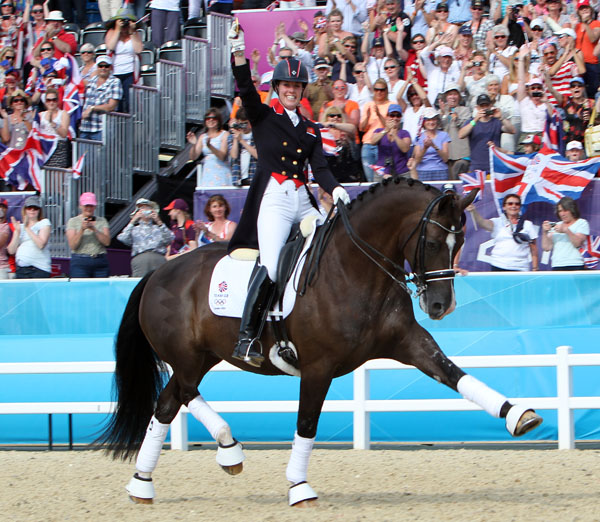
The Olympic Games have closed and at the time of writing this the Paralympic Games are about to begin.  Throughout the Olympic Games we have seen fantastic horsemanship from all countries and I am particularly proud of Team GB. Who can forget those wonderful Team Golds for Team GB in the Showjumping and Dressage, and another Gold with Charlotte Dujardin in the Freestyle Dressage, or even the Team Silver in the Eventing?

These spectacular events feature equine athletes who can be worth thousands if not hundreds of thousands of pounds. It also involves equines being transported from all parts of the globe ready to compete and with that comes the risk of spreading diseases, therefore the AHVLA have had a huge role to play this summer in ensuring London's Olympics have been running not only smoothly but safely for both human and animal competitors too. According to the AHVLA routine risk assessments were carried out and grooms were taught the procedures that needed to be carried out if a horse was suspected to be carrying or suffering from a disease.

In addition at Greenwich itself where the equestrian action took place, all horses were subject to strict veterinary checks in order to ensure the horses were fit to compete, with vets always on-call to discuss any issues that may have arisen. Also the horses had access to an on-site veterinary clinic apparently kitted out with all the technology that may possibly be needed to provide top quality veterinary care during the Games. The clinic also included a pathology lab where tests could be run and equine physiotherapists that could be used by the teams. A Specialist equine ambulance was also prepared just in case of any accidents that could occur during the competition and was reportedly one of only 3 vehicles in the world.

Upon leaving the country after the Games, many equines will also be tested before being exported to ensure they have not caught a disease whilst here in the UK to prevent possible spread to other countries were such a case to be found. In particular the AHVLA test for: African Horse Sickness, West Nile Virus, Equine Viral   Arteritis, Glanders and Vesicular Stomatitis.

No one can deny that the London 2012 Olympics have not been incredible to watch and a have helped to make this a proud year for all of Team GB, however I must say that I am also in awe of the amount of planning and thought the organisers and AHVLA have put in to ensure that this Games was a success for all those involved in the equestrian section! It just goes to show how many people in the veterinary sector work tirelessly to continue to promote and protect equine health and welfare and those who have helped to do so should be in my opinion as proud as the athletes who have won Golds in the equestrian for without them things may not have run so smoothly!

Sources: http://www.horsehealthmagazine.co.uk/?page=news
http://horsetalk.co.nz/2012/07/31/olympic-horses-have-best-health-facilities/#.UDUbx6mPW8A
http://www.defra.gov.uk/ahvla/2012/07/24/protecting-equine-health-and-welfare-during-the-olympic-games/
Image of Charlotte Dujardin and Valegro: http://www.dressage-news.com/?p=17297