Wednesday, 25 June 2014

Looking back at Lambing 2014!

Earlier this year I had the absolute pleasure of going on my first placement as a proper vet student, and it just so happened to be one of the best experiences of my life so far, so I thought I'd share why spending four weeks on a sheep farm in Sussex was just so incredible.

As my second term at vet school drew to a close, I began to pack boilers suits, wellies, a torch, numerous warm jumpers and flasks into a suitcase with a mixture of nerves, excitement and anticipation. I was off to live with a family of shepherds in the remarkably picturesque South Downs, get my first proper experience lambing and learn more about exactly how much work goes into producing meat for our tables!

On arrival I was warmly welcomed by some of the friendliest people I've ever met and taken on a tour of a simply gorgeous rustic style farm that had been used as a sheep farm for countless generations in the past. As the sun set behind the hills it felt so indescribably magical to know that over the next few weeks I would play a role in bringing new life to this farm as many others had over the years and that idea of being incorporated into something so special made me even more determined to work as hard as I could to improve my knowledge of shepherding.

The first few days were physically and mentally tough. Unfortunately animals do not understand the concept of a 9-5 working day, therefore it was up and out onto the yard for 7am most mornings and performing checks on the sheep out in the fields until around 12pm (with breaks for lunch and dinner of course!) It was one of these night checks that I remember so poignantly.

 It was about half past ten at night and myself and a fellow vet student had driven the quad bike and trailer out to the field where the ewes to lamb were being kept. I sat on the side of the quad and scanned my torch light around, the reflection of the beam catching in the ewes eyes and being reflected back at me (Sheep have a part of their eye known as the tapetum lucidium which refracts light onto their retina and helps them to see in the dark, this is what causes the reflection of the torch light). Finally we saw two tiny shapes limp and almost lifeless in the centre of the strip- these were small hyperthermic lambs, their mother a shearling (a first time mother). Both myself and my partner groaned and admittedly cursed a few times as we tried to get close enough to put the mother in the trailer with her lambs. Finally with the help of the crook (seriously indispensable when catching sheep) we had her! Once we had the lambs back at the farm we knew we had to act quickly to provide them with warmth and colostrum (the first milk produced by the ewe.) While my friend hooked up the electric heat lamp, I collected an empty measuring jug and cornered the ewe to milk her- after a few moments of darting about she obliged and allowed me to extract enough milk to feed her lambs. As I watched the colostrum slowly trickle down the stomach tube I remember praying that this would be enough to save them as there is nothing more down heartening at lambing time than a ewe losing her lambs. Eventually we knew that there was nothing more we could do and giving the lambs navel a dip of iodine to prevent infection turned out the lights to the barn. When I returned the next morning to the pen I was amazed and delighted to see both lambs stood up and attempting to suckle from their mother who with a quick stamp of her hooves assured me that I had done my job and she would take it from there.

Sheep have a sadistic sense of humour too, of that I am sure! Every evening before supper one of the main jobs was to help herd the sheep in from the daytime hilly fields into a straight flat field further on. While most of the flock would happily trot down the hills to the bottom to the rustling of a bag of feed, there was always a straggler - this particular straggler I named Yorkie after the nursery rhyme "The Grand Old Duke of York". Yorkie's favourite activity it seemed was to wait at the top of the highest hill she could find and cause vet students the agony of walking all the way up to escort her down every evening without fail as the shepherd couldn't use his sheepdog on the pregnant ewes.  As soon as you would reach the top, considerably out of breath, Yorkie would sprint down to the rest of the flock with what I am convinced was a skip of laughter as I plodded behind praying for the day she would lamb so she could be brought indoors!

A lamb named Trouble also touched my heart during my stay on the South Downs. The first day I arrived at the farm, the shepherd had taken me to see the ewes that had lambed in the sheds and there he was - except he wasn't in a good way at all. Lambs are naturally born to stand as soon as possible and Trouble had been born a few days before yet was still on his side, surviving on milk fed to him by a stomach tube. Nevertheless we decided to give him a chance and I helped with his care over the next few days until miraculously one day he walked- even if his sense of direction was appalling. Soon after his discovery of his legs, Trouble decided his occupation was to be an explorer and countless times we found him wandering off into the pens of other ewes. His own mother showed little interest in him (and had another lamb to attend to) and he little interest in her so we decided for the benefit of both animals to make Trouble our first "orphan lamb." For those of you who may not know, just because a lamb is called an orphan lamb does not mean its mother is dead - in fact often they are from a ewe that had triplets and cannot rear 3 lambs herself, or like Trouble, the lambs are weaker and smaller so may need more care and attention. Bottle feeding the orphans became one of my favourite jobs as it meant I got to know the characters of the various orphan lambs - especially Trouble who then took on the persona as the "anti-social lamb" preferring his own company to that of the more boisterous of the group. To further increase his reputation, several times we attempted to adopt Trouble to another ewe and each time rather than the ewe rejecting him, he would reject the ewe refusing to suckle from her even with our encouragement and trying to hold him to the teat. Eventually  the farmer turned to me and asked me to mark him with stock spray paint  so I drew a T on his side so the world would know that Trouble was an independent spirit. I am happy to report that Trouble is still well and as cheeky as ever back at the farm and is secretly a favourite of every person who meets him for his cheekiness!

Then there was the indescribable feeling of helping bring a lamb into the world. Before arriving at the farm, the closest I had been to assisting with a birth were the simulators at vet school which consisted of a plastic box, some warm water, a fake lamb and a sheep pelvis- it didn't even compare to what it is like in reality. In reality you are completely reliant on your sense of touch to determine what position the lamb is in and to differentiate between a forelimb and a hindlimb, a head or a tail. In addition you know that a life depends on your actions, not enough care and the hoof of the lamb could damage the inside of the ewe, not getting a breached lamb (coming out backwards) out as fast as possible and it could die. My favourite sound soon became the flap of wet ears as the newborn lamb shook it's head for the first time and the soft nickering of the ewe, my favourite sight that of the lamb wobbling to its feet for the very first time. I am yet to see many things more wonderful than that.

I think what makes me so grateful for the time I spent lambing was because it taught me that the most beautiful moments in life can be the simplest, and sometimes it is so easy to forget that. No other experience has ever made me feel as whole as those 4 weeks did. Despite the long hours, moments of heartbreak and pure exhaustion I would do it all again in a heartbeat. I never could find the words to express all these feelings to the farmers while I was with them but I hope that if they perchance across this blog they will know that they gave me the most incredible opportunity and memories I know I shall treasure for the rest of my life, for that I cannot thank them enough.



Sunday, 25 August 2013

The roller-coaster ride to vet school

I am to report that after preparing for years and dreaming of winning a place, I will successfully be starting vet school in September!
As any vet students who remember receiving their acceptance letter out there can sympathise, I am beyond ecstatic and cannot wait to get started- so much so that in fact I feel the break between A levels and uni is dragging, although I have still been attending my regular work experience placement to fill the time!

It certainly hasn't been easy getting to this point though when I look back at the past 12 months, starting from personal statement to the BMAT, to interviews, to an offer and finally to an accepted place. In fact at one point I was planning a gap year having initially been unsuccessful in the first round of offers made, yet thankfully out of nowhere I was made an offer a lot later based upon my interview performance- despite the fact that of all the vet school interviews I felt the one at this particular uni had gone the worst!

Now looking at the long list of equipment and essentials to purchase before moving out, I cannot believe that I'm in this position at last, after making the sacrifice of a social life at exam time, dedicating a vast amount of holiday time to taking up work experience posts and swinging from one emotion to another after the initial disappointment of no offer to the elation of one being placed before me. In addition I was also extremely happy to find out my exam results were beyond my expectations with A*'s in Biology and English Lit and an A in Chemistry.

So there you have it- a month from now I'll be writing this blog as officially a vet student and hopefully I'll be bringing more veterinary issues and notes with a new insight.

Thursday, 14 February 2013

Schmallenberg Virus updated!

In 2012 I created a post on the Schmallenberg virus affecting livestock in the UK. A few months on I've returned to reflect on this virus which unfortunately is still causing the loss of lambs and calves, with no vaccine to protect herds in the future available at present.

As mentioned before, Schmallenberg is spread by midges which act as vectors for the disease. It is believed that midges from Europe carried this disease across the Channel where it was then transmitted by our own native midges through biting the livestock, whilst the disease remained dormant in the winter months. In adult livestock, the disease does not pose a large threat with most recovering having only shown symptoms of reduced milk yield and a fever. It is if bitten by a midge carrying the virus whilst pregnant that the disease causes problems for the animal and its young. The implications of being infected by Schmallenberg whilst pregnant are stillborn lambs and calves often with twisted, deformed limbs, curved spines and damage to the nervous system. As a result if called out to such a case, cesareans are sometimes required to remove dead lambs, and in the process ewes are also often lost. In addition with the price of lamb falling, cesareans are becoming a less economical option for farmers.

Now as early lambing begins, farmers have noticed an increase in the number of cases of Schmallenberg lambs with farms reporting cases in all counties of England and Wales. It is expected that herds infected can expect to potentially lose up to 30% of their lambs. Obviously this will have a knock on effect on sheep farmers economically, but also psychologically after having to deal with the mental strain of delivering stillborn, deformed lambs and the potential euthanasia of some of their ewes.

A vaccine isn't out of the question in the future however, as scientists have been working on one, but currently due to the need for such vaccines to pass clinical testing and licensing standards it is believed that a vaccine will not be available until the summer at the earliest which will be too late for many herds around the country this year, but promises hope for subsequent years where farms may be better protected against the virus.  

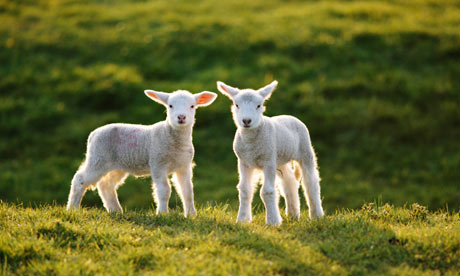
Picture: www.guardian.co.uk/lifeandstyle/wordofmouth/2010/feb/12/lamb-school-teaching-andrea-charman

Sources:www.defra.gov.uk/animal-diseases/a-z/schmallenberg-virus/
www.nottingham.ac.uk/news/pressreleases/2013/january/schmallenberg-virus,-a-grim-picture-for-2013.aspx
www.bbc.co.uk/news/uk-wales-21390225

Thursday, 25 October 2012

Bovine TB updated!


It's continued to attract media attention and has become rather a controversial topic at the moment. Badger culling to prevent the spread of Bovine Tuberculosis was the proposed action plan in Gloucestershire in the hope of potentially reducing the number of bTB cases by up to 16% DEFRA quoted. Bovine Tuberculosis costs the taxpayer £100 million per year and last year caused the slaughter of 26,000 infected cattle placing strain on farmers whose herds are affected.

However in the past week the government has postponed the proposed cull until 2013 as in order for the cull to be effective it was found in a randomised trial known as the Krebs trial, 70% of the badger population in the area would have to be eradicated, however farmers felt that this number could not be achieved before the winter months set in and the badgers returned underground.

To campaigners, this news was of great relief as it gives them more time to gain more support against the cull with an e-petition already gathering over 150,000 signatures. Many feel that a vaccination programme for both cattle and badgers is the way forward, however this is currently banned by the EU as it interrupts the tuberculin skin test which detects Tb cases in cattle. Recently it has been announced that scientists working for the Animal Health and Veterinary Laboratories Agency have found a way of making the vaccine distinguishable from the response of the skin test meaning that vaccination may become a slightly more viable method of dealing with bTB. But like any other testing process, it still has to be trialled in order to prove it does work in the way it should and validated by regulating bodies meaning that it may come too late for this particular case.

So let's look at the arguments for and against badger culling as a method for dealing with bTB.

For
Evidence from the Krebs trial, a £50 million study suggested that if the condition of 70% of a badger population in an area could be met that cases of bTB could be reduced by approximately 16% after nine years.

Vaccination of both badgers and cattle proposed by the other side are costly, time consuming and rely on being able to trap a large proportion of the badger population which may prove difficult in practice. Vaccination is a preventative and will not cure the badgers already carrying TB.

A reduction in bTB cases if achieved through the cull will also see a reduction in the amount of taxpayers money compensating farmers whose herds have to be destroyed because of bTB.

Farmers are willing to pay for the cull themselves without the use of taxpayers money to hold the cull.

Against
There is also evidence to suggest culling could increase bTB cases in the area as badgers surviving the cull would move to form new family groups spreading the disease, this could lead to more cases outside of the cull zone although the impact will decrease over time.

The method planned for culling badgers by free shooting was not used in the initial randomised trial, instead badgers were trapped and then killed, therefore the results produced by the cull could be less or more than expected as the cull may not be carried out with the same vigor.

Badger and cattle vaccination is supported by many animal charities and has shown positive results in badgers where it has been used by conservation authorities in England, Wales and Northern Ireland.

Biosecurity improvements are also another favoured method as bTB is believed to be transferred from badgers to cattle through faeces and urine.  It is estimated that to farmers the cost of improving biosecurity to prevent badgers from coming into contact with cattle is roughly £4000, when considering the cost of a case of TB leading to the destruction of a herd which can cost £27,000 this measure appears more cost-effective.

Many fear that badger culling has become overidden by political opinion and emotion rather than the scientific evidence already presented.


Image of badger :http://www.telegraph.co.uk/earth/earthnews/9615773/Badger-cull-will-cost-taxpayers-millions.html
Image of cattle: http://www.topnews.in/usa/cattle-descended-small-herd-domesticated-around-10500-years-ago-216597

Other sources: http://www.dailymail.co.uk/sciencetech/article-2214442/British-vaccine-breakthrough-save-cows-TB-end-controversial-badger-culls.html?ito=feeds-newsxml
http://www.bbc.co.uk/iplayer/episode/b01nbrj7/Material_World_18_10_2012/
http://www.bbc.co.uk/news/health-19637936

Friday, 5 October 2012

So this is it!

After weeks of preparation, my UCAS application to the vet schools went off today! I have finally chosen to apply to Nottingham, Bristol, The Royal Veterinary College and Edinburgh, there are a few more formalities I'm left to do to complete my application such as work experience questionnaires and the BMAT. Now I'm left feeling quite anxious but then excited at the same time, a weird mix I know!

At the same time I am still continuing with my weekly work experience at the vets and milking at the weekends, this is helping to keep me driven to get the grades in the summer whilst also keeping me informed of issues in the veterinary and farming world which I realise I need to be aware of. Additionally I'm finding regular work experience at the vets has allowed me to put into context some of the things I'm learning in Biology and Chemistry especially as the vet I often watch in consults is great at explaining things to me afterwards such as the drugs he's elected to prescribe, why he's given certain pieces of advice, and how he deals with certain situations. If you're interested in a career in veterinary medicine in my opinion, getting a regular work experience placement if possible with a local practice is a great opportunity, especially as the longer you spend with a practice the more they seem to trust you and the more you learn! I'd also say that working in more than 1 practice has been an interesting experience as each practice has its own routines and approaches.

Anyway, I just thought I'd leave a quick post to summarise where my quest to be a vet is at so far!

Picture: http://umcspace.missouri.edu/historic/buildings/VetScience/1989.htm

Saturday, 15 September 2012

Milking time!

Since I will be going back to a dairy farm tomorrow to fit in some more work experience with cattle, I thought I'd post what I learnt from my experience there last time and have a re-cap myself!

First of all I helped to bring in the cows from the nearby field into a 14/28 milking system which as the name suggests milked 14 cows at a time on either side. Once into the milking parlour, an antiseptic solution was placed on the cow's udders to ensure they were clean and would not contaminate the milk being produced, the farmer taught me how to attach the machinery to the udders. After the machinery had milked the cows, it detached itself and sent out jets of water...which often ended up soaking me and it was my job to dip the teats of the cow in iodine to prevent the possibility of mastitis occurring. In terms of animal handling skills, I was also told how when dealing with cows it is better to stand to behind them than to the side as there is a reduced chance of you being kicked.

After milking, I was shown to two new-born calves who I got to feed with a solution of pre-made milk. Both of them were twins and the farmer discussed with me how this had a negative effect upon the mother and told me that twins were not favoured in cattle raising. As soon as they were old enough the farmer intended on sending them to market.

Next, I followed the farmer out to watch her inject a cow with antibiotics following a recent infection and helped to pen the cows up for the night. Finally I returned to the milking parlour and helped to wash down the surfaces and machinery in order to prevent the spread of disease and attracting flies which could lead to flystrike in the herd and is obviously unhygienic for producing milk in. By working on a dairy farm I witnessed the commercial side of keeping livestock and the hard work farmers have to put in in order to meet demand and survive as well as keeping a healthy, happy herd.

Last time I went milking was really fun as I enjoyed the hands on experience and getting stuck in, so I am looking forward to going back again tomorrow a lot and will keep you updated!
                                 
Image: http://www.collapseboard.com/everett-true/the-sacred-cows-of-indie-music-3-joy-division/attachment/us-dairy-cattle/

Tuesday, 11 September 2012

The basis of animal welfare - the five freedoms.


The five freedoms was initially suggested by Professor Roger Bramwell after the government asked him in 1965 to conduct an investigation into the welfare of intensively farmed animals. From this investigation Bramwell reported that animals should have certain rights if kept under human care- these are known as Bramwell's five freedoms and are aspirations for ideal animal welfare.

Bramwell's Five Freedoms
1. Freedom from hunger and thirst - this can be achieved by ensuring water is avaliable at all times and animals are provided with the correct nutrition regularly.
2. Freedom from discomfort - by allowing animals to rest, provding them with shelter
3. Freedom from pain, injury or disease -by providng a rapid diagnoses and treatment of a condition or disease as well as taking preventative precautions.
4. Freedom to express normal behaviour - provding suitably sized areas for livestock to graze, hygenic and safe facilities, company of the animals own kind
5. Freedom from fear and distress - ensure conditions and routines do not cause the animal any stress

From this report being published, the Farm Animal Welfare Advisory Committee were formed to monitor how the livestock farmers would respond to these new guidelines. The RSPCA also have adopted the five freedoms as their basis for animal welfare rules.

The five freedoms are also now included under the Animal Welfare Act 2006, and if you are a pet owner it is your responsibility by law to meet these whilst the animal is under your care. Failure to could cause fines of up to £20,000 a minimum sentence of 51 weeks in prison and a lifetime ban on keeping animals.

If all owners of animals followed these five simple rules a good standard of animal welfare could be achieved leading to a healthy, happy lifestyle for those animals in our care.