As mentioned before, Schmallenberg is spread by midges which act as vectors for the disease. It is believed that midges from Europe carried this disease across the Channel where it was then transmitted by our own native midges through biting the livestock, whilst the disease remained dormant in the winter months. In adult livestock, the disease does not pose a large threat with most recovering having only shown symptoms of reduced milk yield and a fever. It is if bitten by a midge carrying the virus whilst pregnant that the disease causes problems for the animal and its young. The implications of being infected by Schmallenberg whilst pregnant are stillborn lambs and calves often with twisted, deformed limbs, curved spines and damage to the nervous system. As a result if called out to such a case, cesareans are sometimes required to remove dead lambs, and in the process ewes are also often lost. In addition with the price of lamb falling, cesareans are becoming a less economical option for farmers.
Now as early lambing begins, farmers have noticed an increase in the number of cases of Schmallenberg lambs with farms reporting cases in all counties of England and Wales. It is expected that herds infected can expect to potentially lose up to 30% of their lambs. Obviously this will have a knock on effect on sheep farmers economically, but also psychologically after having to deal with the mental strain of delivering stillborn, deformed lambs and the potential euthanasia of some of their ewes.
A vaccine isn't out of the question in the future however, as scientists have been working on one, but currently due to the need for such vaccines to pass clinical testing and licensing standards it is believed that a vaccine will not be available until the summer at the earliest which will be too late for many herds around the country this year, but promises hope for subsequent years where farms may be better protected against the virus.
Now as early lambing begins, farmers have noticed an increase in the number of cases of Schmallenberg lambs with farms reporting cases in all counties of England and Wales. It is expected that herds infected can expect to potentially lose up to 30% of their lambs. Obviously this will have a knock on effect on sheep farmers economically, but also psychologically after having to deal with the mental strain of delivering stillborn, deformed lambs and the potential euthanasia of some of their ewes.
A vaccine isn't out of the question in the future however, as scientists have been working on one, but currently due to the need for such vaccines to pass clinical testing and licensing standards it is believed that a vaccine will not be available until the summer at the earliest which will be too late for many herds around the country this year, but promises hope for subsequent years where farms may be better protected against the virus.
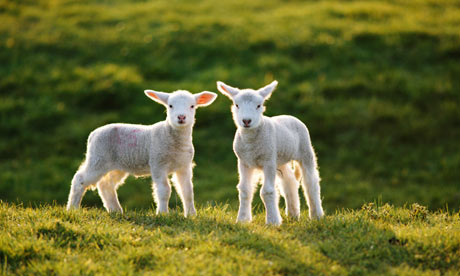
Picture: www.guardian.co.uk/lifeandstyle/wordofmouth/2010/feb/12/lamb-school-teaching-andrea-charman
Sources:www.defra.gov.uk/animal-diseases/a-z/schmallenberg-virus/
www.nottingham.ac.uk/news/pressreleases/2013/january/schmallenberg-virus,-a-grim-picture-for-2013.aspx
www.bbc.co.uk/news/uk-wales-21390225

No comments:
Post a Comment